Friday, May 13, 2011

May 2-3 NEVADA INDIAN AGRICULTURE SUMMIT: CUI UI FISH & SLAUGHTERHOUSE

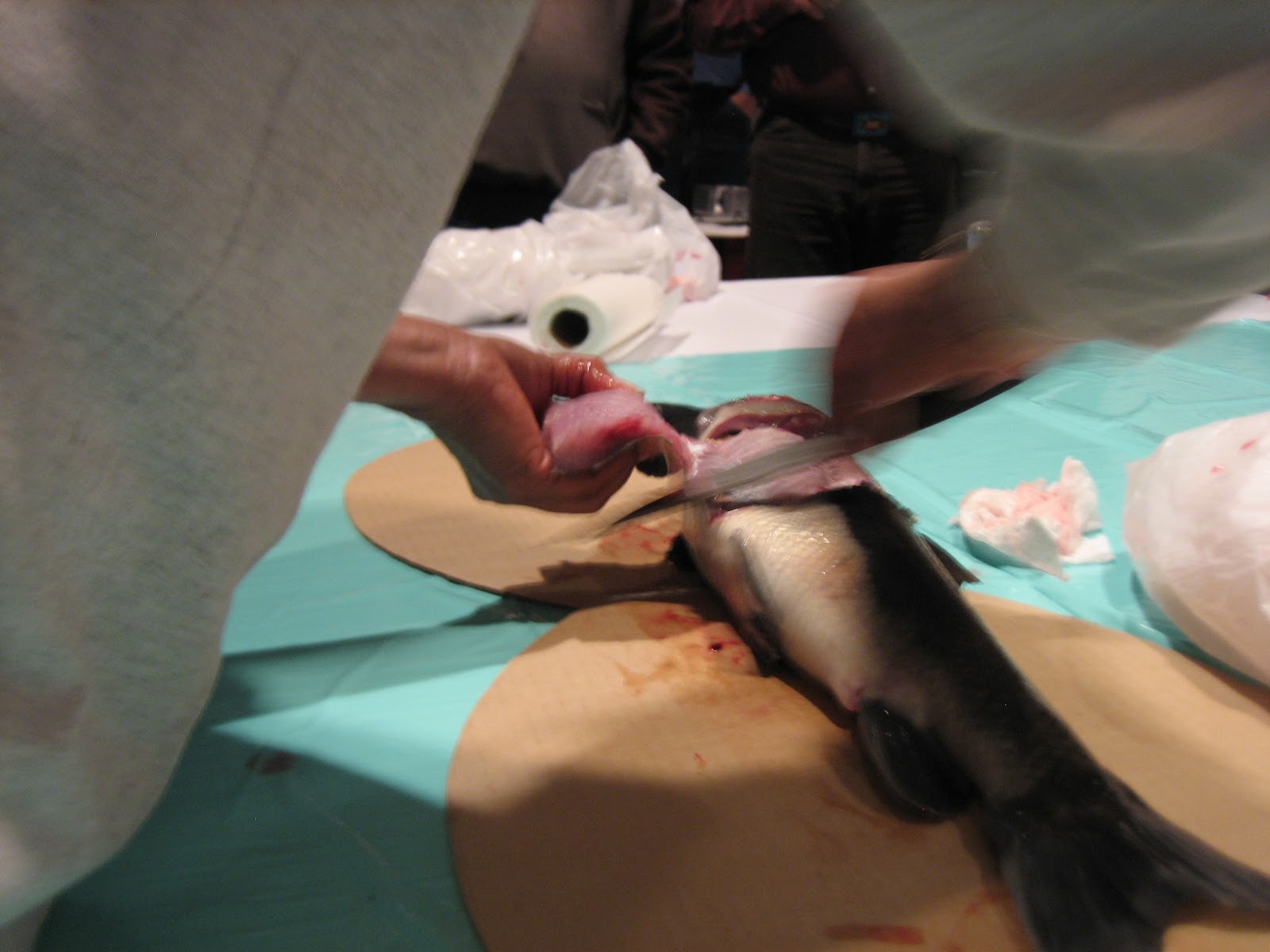
The elusive and prehistoric Cui Ui fish, found only in Pyramid Lake, a traditional food of the Paiute people. Recorded on May 2, 2011 using a Flip Video camcorder at the Nevada Indian Agriculture Summit at John Ascuaga's Nugget.


We also took a tour of Wolf Pack Meats, a USDA certified slaughterhouse and packaging facility for livestock in Reno, Nevada.


We had a delicious tri tip lunch in the slaughterhouse.
 The Butcher.

The kill shoot.


This is a bansaw.

 This is where they hang.

Tuesday, February 8, 2011

Nevada Indian Country Extension

The second issue of NICE is finally here! Please take a second to check out all of the interesting things that have been happening on reservations in Nevada.

Wednesday, November 17, 2010

NOV. 17: time to celebrate Geographic Information Systems!


GIS Day
More information can be found at: http://www.gisday.com If you register your GIS day events in advance they will send you some materials! 

A special note to Extension folks, if you are working with youth and are doing a GIS awareness building event that is not on the National GIS day you can still register an event.  Let them know you are working with kids and they will generally send you things for your event (Pencils, buttons, etc).  They really are helpful in providing for youth awareness events!

Everyday helpful materials can be found in the resources section of their website (http://www.gisday.com/support/index.html).  There are ideas, materials and event based materials (handouts, poster templates, ppt’s, and more)

If you are working with any youth, educators or youth groups such as 4-H) make sure they are aware of the GIS resources found at: http://edcommunity.esri.com/.  This includes:
·         Data & lessons at (http://edcommunity.esri.com/arclessons/arclessons.cfm)
·         Make sure the 4-H folks you know are aware of the Esri Grant programs (on the right side of the 4-H page) as the deadline is nearing (December 1)
·         Also to tie Geography Awareness Week theme & GIS day together there are resource for this and past years at: http://edcommunity.esri.com/gaw/  (click on the year at the top to get to the resources).


GIS Related Videos:
·         The Geospatial Revolution video trailer and episodes that have been released are a great awareness building piece: http://geospatialrevolution.psu.edu/
·         GIS day has a YouTube channel http://www.youtube.com/gisdaytv
·         The GIS day website has videos linked on their “During your event” resource page: http://www.gisday.com/support/materials3.html
·         Remembering that the roots of  GIS had a start with the Canadian Land Inventory this video shows the beginnings of GIS and reminds us of  the humble ,yet important, roots of GIS and mapping technologies (Roger Tomlinson is at the end of part 1).
·         Each GIS day my friend  and colleague Lyn Malone in Rhode Island sends out a GIS day video that her daughter creates (who lives and works with GIS in Austin, TX).  This year’s video is based on the song “Empire State of Mind” http://www.youtube.com/watch?v=4mCDUf08YLg 
Other years versions include:
o   A take off on a Beatles song concept: http://www.youtube.com/watch?v=wDVNBDIVUZo
o   And the song Be Our Guest (I know it from the Beauty & the Beast movie) this was the first I think and one of my favorites: http://www.youtube.com/watch?v=iKHc9iub5Fw


Geography Awareness Week and the Theme of Fresh Water
The National Geographic GAW website: http://www.mywonderfulworld.org/gaw.html  is your best bet for a full array of wonderful information including films, books, activities, etc. As there is a WEALTH of information hosted on this site, a few highlights for this week:

Freshwater Booklist: http://www.mywonderfulworld.org/pdf/Freshwater_Booklist.pdf provides a comprehensive list of books (of all types), broken-down by grade clusters.  The list includes short descriptions for each book—this list is a GREAT starting point for thinking about how you can incorporate geography into other subject areas.

The National Environmental Education Week: http://www.eeweek.org/resources/water_curricula.htm this is a HUGE list of curriculum materials related to water, broken down by grade cluster.  As you look through the list, you’ll see several resources produced by WET: http://www.projectwet.org/, this is a great site as well, it includes a TON of resources addressing a variety of water-related issues, many of these resources are specific to teachers. Additionally, if you’re looking for resources to engage your students in water-related activities and issues outside of Missouri, this is a good place to look.

The water footprint calculator: http://environment.nationalgeographic.com/environment/freshwater/water-footprint-calculator/ (it’s available under the “Protect Freshwater” section of the site); for those of you who have done a carbon footprint calculator, this is similar.  It shows you how your freshwater consumption compares to the average American and provides an opportunity for you to pledge to cut-down on your intake.  Certainly numerous ways this can be incorporated into your classrooms.

Freshwater Films: http://www.mywonderfulworld.org/pdf/GAWeek_FilmList_2010.pdf This is a fantastic list of films broken down by grade level that can introduce your students to issues surrounding diminishing freshwater resources.  There are a few classics on the list, I’ve had a chance to watch a couple in the last couple of weeks that I hadn’t seen before: “Blue Gold: Water Wars” and “FLOW: How did a handful of corporations steal our water?” Both are excellent films that address the implications of privatization of freshwater resources.

National Geographic Magazine April issue on Water: http://www.zinio.com/delivery/login.jsp?of=500357149&_requestid=67268&_requestid=67268 this is an amazing resource and it’s available for free download during the month of November.  The entire issue has been digitized there are several really neat interactive features!  Once you download the issue, it’s yours forever.  Also, the education foundation has worked with the magazine to offer digital subscriptions to teachers at an educator’s rate of $12.


MISSION EXPLORE FRESHWATER: http://www.mywonderfulworld.org/pdf/MissionExplore_Freshwater_PDF.pdf This is SUPER fun, especially for younger kids. The booklet contains 10 different water-related missions kids can complete in groups or on their own.  Missions range from creating a river story to pretending to swim like different animals to creating water dances. 

RIVER OF WORDS: http://www.riverofwords.org/  this site is a REALLY neat site is about “connecting kids to their watersheds and imaginations through poetry and art.”  The “for educators” tab on the right contains some great resources, including a link to the “signals of spring” website that has lots of great activities designed to increase students’ awareness and ease with earth image data (http://www.signalsofspring.net/).

NAT & GEO’s ADVENTURES: http://kids.nationalgeographic.com/kids/games/actiongames/waterlogged, for all of you who are parents, this is kind of fun for your kids!  There are two game options, one that allows you to kayak down the red river and the other allows you to explore a shipwreck.

ESRI: http://edcommunity.esri.com/gaw/ once you click on “2010” on the top of the page, there are some GREAT resources!  Three very interesting lessons: examining storm water using GIS; analyzing water in the USA using GIS; and assessing environmental impact on Montana’s watersheds.  In addition to these lessons, there’s some great articles discussing how to implement GIS-based activities (related to water) into your classrooms, and finally there are links to a bunch of neat water-related clips on youtube.


Special thanks to Dr. Meri Marsh,  Missouri  Geographic Alliance Geography Awareness Week Coordinator for compiling the GAW resources that I have included.

Wednesday, November 10, 2010

Successful orchard planting on a beautiful November day...

Over 100 trees of all varieties were planted were planted by volunteers at Pyramid Lake on Saturday Nov. 6th. including pomegranate, persimmons, apples, nectarines, almonds, cherries, pears and others. Some of the trees even had multiple grafts on them, allowing them to produce more than one variety of fruit from the same root mass. It was explained that the trees are mature enough to produce fruit by next year, but that it would not be advisable to allow the fruit to set until two to three years pass. This technique will create less stress on the young branches and enable the tree to become strong for the future.

Wednesday, November 3, 2010

COME PLANT A TREE!

Notice To:
TRIBAL COMMUNITY
And Friends
Your volunteer help is needed for

TRIBAL ORCHARD PLANTING
Saturday – November 6, 2010
201 South Hollywood Road
Nixon, NV
100+ fruit trees coming, learn how to prepare ground and how to plant trees
Planted by Dreyer’s Fruit Bars in partnership with the Fruit Tree Planting Foundation.
Set up at 8:00 AM
Volunteers to arrive at 10:30 AM
 Overview/Introduction 11:00 AM
Tree Planting/Workshop 11:20 – 2:00
*Bring own gloves & shovel & your “Sack Lunch”

Free 30 T-Shirts/35 Bags for volunteers/Free Fruit Bars

Monday, October 25, 2010

Breaking Ground at the Pyramid Lake Orchard

Earlier this year, Dela Johns, a Natural Resources Coordinator at Pyramid Lake, applied for a grant through Dryer's Fruit Bars which would secure a full scale orchard if the community could gain enough support through public votes cast online. Towns from across the country competed for the prize, but at the end of August it was clear that Pyramid Lake had enough support in order to make the proposal a reality. A patch of land that was once an old baseball field (just outside the doors of the Natural Resources office) was designated as the best location for the trees. UNCE helped test the soils, which proved to be ideal for agricultural production. 
Last Friday, myself and Randy Emm (also of UNCE), were on site to oversee the groundbreaking. Although we were here to investigate new agricultural efforts in rural development, I must digress. I was surprised to notice something else going on in the periphery of our focus, solar panels. All of the schools, the museum and even some of the administrative buildings along our route to Nixon had solar panel grids. "This is the first solar highway in the country", said Johns. "The folks at Burning Man have donated and even taught our guys how to maintain the grids."
But back to the old baseball diamond where the fruit trees will be planted. The field is no doubt a fertile place for growth as new grasses have recently emerged after an unexpected fall rain shower. An irrigation system will reduce the amount of hands on maintenance required to produce a successful crop. To allow the orchard maximum exposure to sunlight, and to ensure loose soils for roots to develop in, a backhoe was used to trench out rows in an east-west grid, with rows spaced 20 feet apart. The trees will be placed 15 feet apart form each other within the rows. On November 6th, over 100 fruit trees of all varieties will arrive to be planted and nurtured for years to come.
"The idea of a community orchard fits the Paiute value of being self-sufficient and sharing. The orchard will be the table where the community will be brought together through education and action The orchard will be a sustainable source of nutrition and provide environmental benefits such as making oxygen, using up carbon dioxide, stabilizing eroding soils, putting nutrients back into the soil, and provide habitat for the small wildlife."
Nixon, NV
red = orchard
yellow = solar panel grids

Wednesday, October 6, 2010

Bring your kids to learn about geography, maps, and finding stuff with satellites!

Using GPS receivers we'll be creating and locating nearby geocaches. We'll also be using computers to create and view custom maps. Ages 9-19, FREE.